./Qiddiya City./

Brent Cross Flourishing Index

My belief

Strong design is not only about the final visual outcome—it depends on the systems behind it. Clear processes, shared standards and intelligent prioritisation give teams the structure to deliver consistently at scale, while protecting the time and attention needed to make complex information clear.

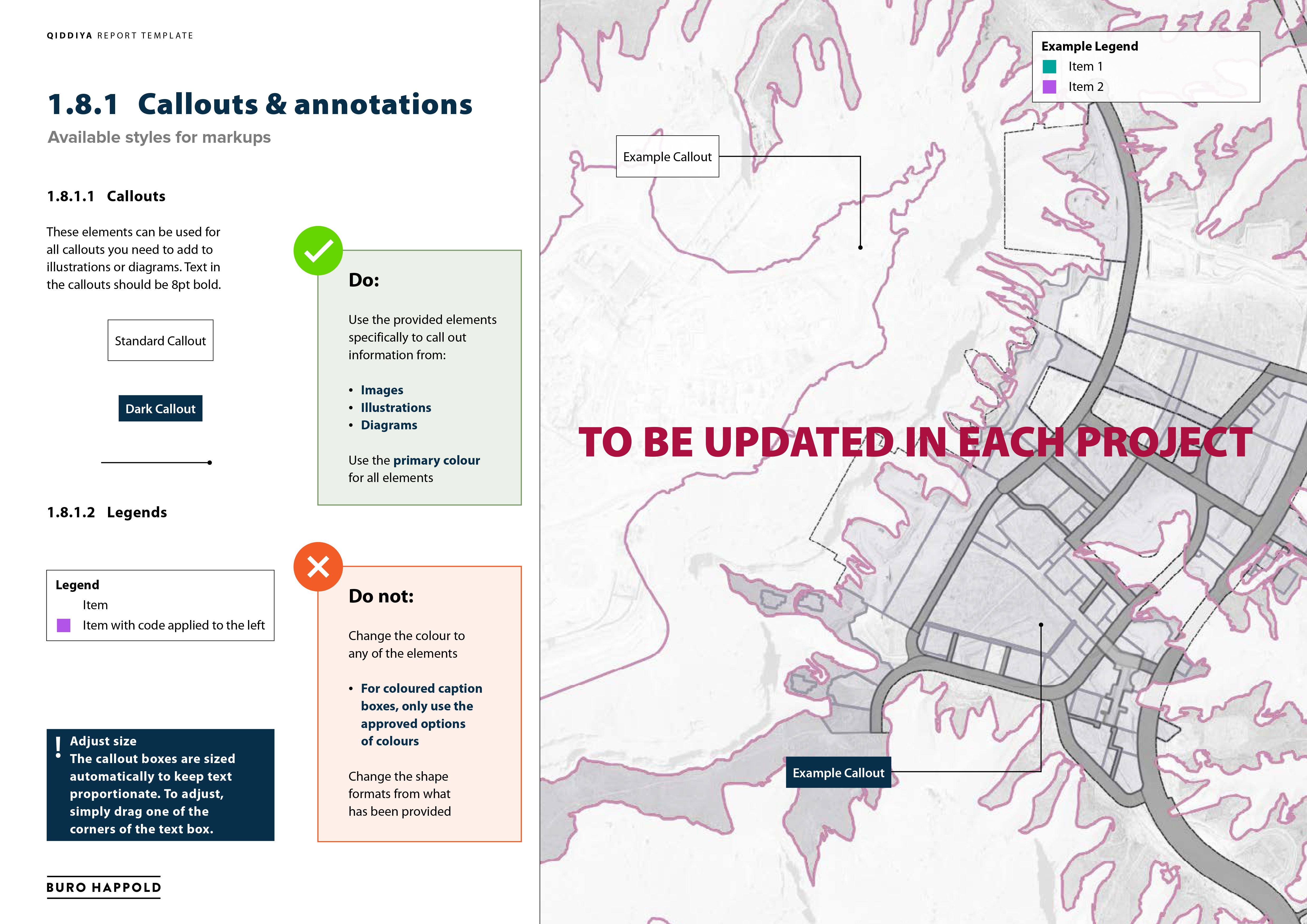
On a project of this size, a robust design operation made it possible to bring a unified look and feel across all districts Buro Happold is providing services for via a seried of detailed templates as well as the delivery of thousands of pages and individual technical graphics into one coherent, high-quality reporting experience.  
 

./Qiddiya, the city of Play

Qiddiya City is a major planned city development near Riyadh, centred on entertainment, tourism and new ways of living. Buro Happold has been part of the project since 2021 and is delivering engineering services across a number of districts.

The challenge

A high-quality consolidated InDesign document needed to be created from 18 discipline-led reports in PowerPoint which currently doesn't support an export option. This is in addition to the management of 24+ diagram redesigns for improving visual clarity.

Criteria

  • Efficiently review and export 20 reports on a deadline
  • Creation of a standardised template and style for consistency
  • Method for managing and prioritising bespoke diagrams from 18 teams/disciplines

2,500+

pages reviewed and exported

50+

bespoke diagrams improving clarity

Largest reports

delivered in record time

Creating the system before the delivery

A successful report of this scale needed more than a final layout—it needed a system that could support many contributors, disciplines and types of content.

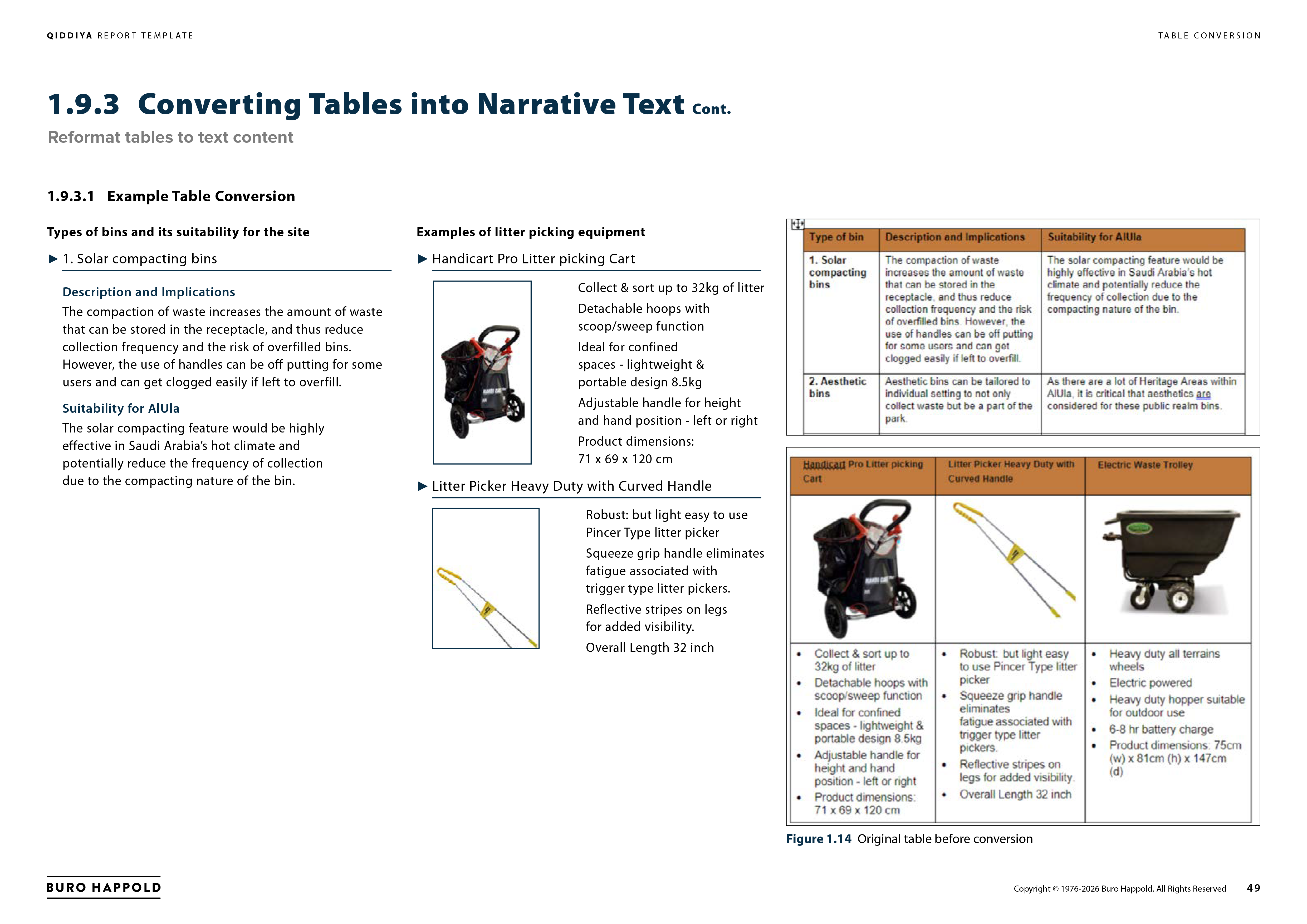
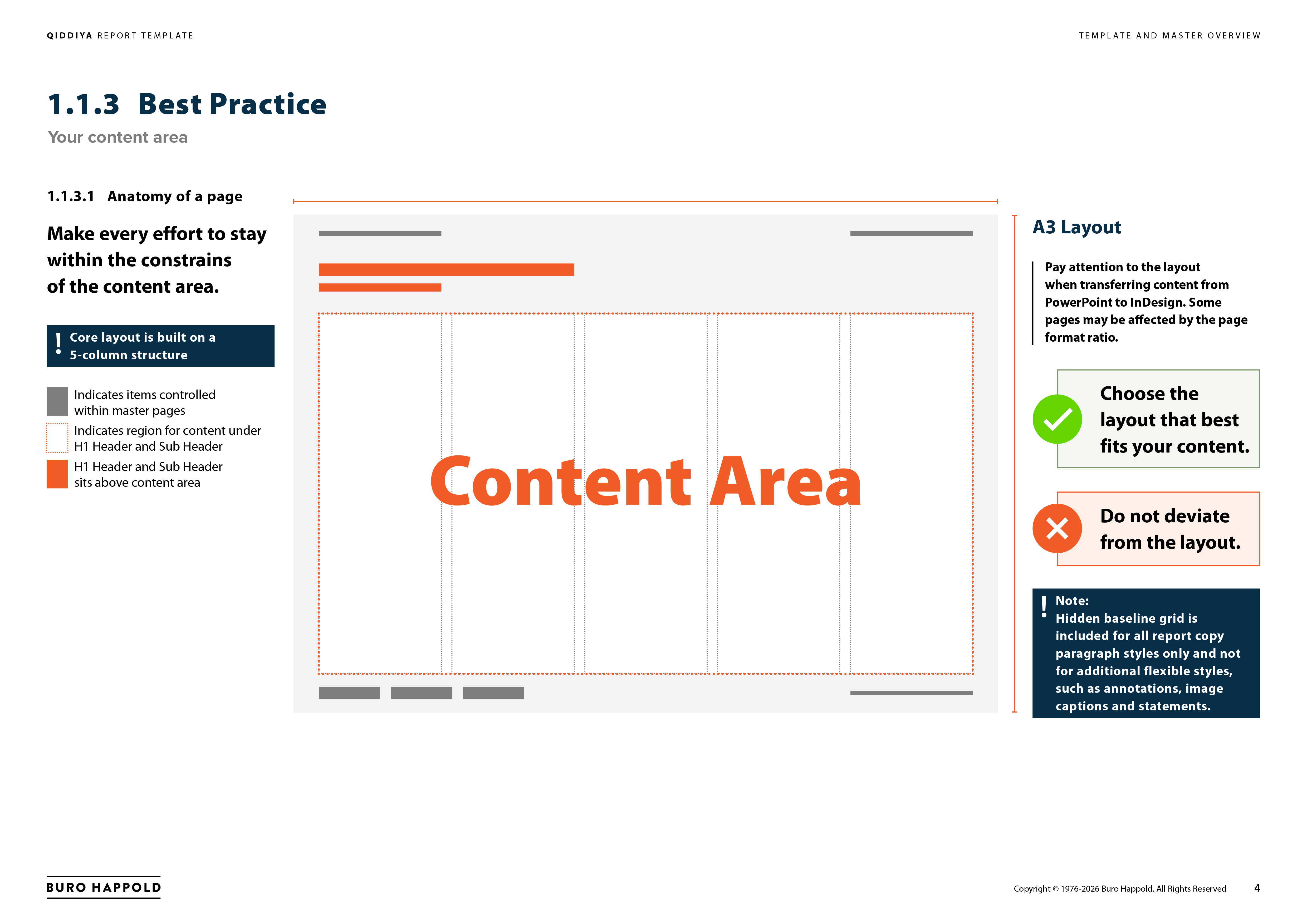
The team first created a suite of PowerPoint and InDesign templates, supported by comprehensive usage guidance. From grid structures and page layouts to typography, colour and graphic components, the system created a shared set of standards while allowing teams to adapt content to their particular needs. In the case of indesign additional automation and GREP scripting were also implemented.

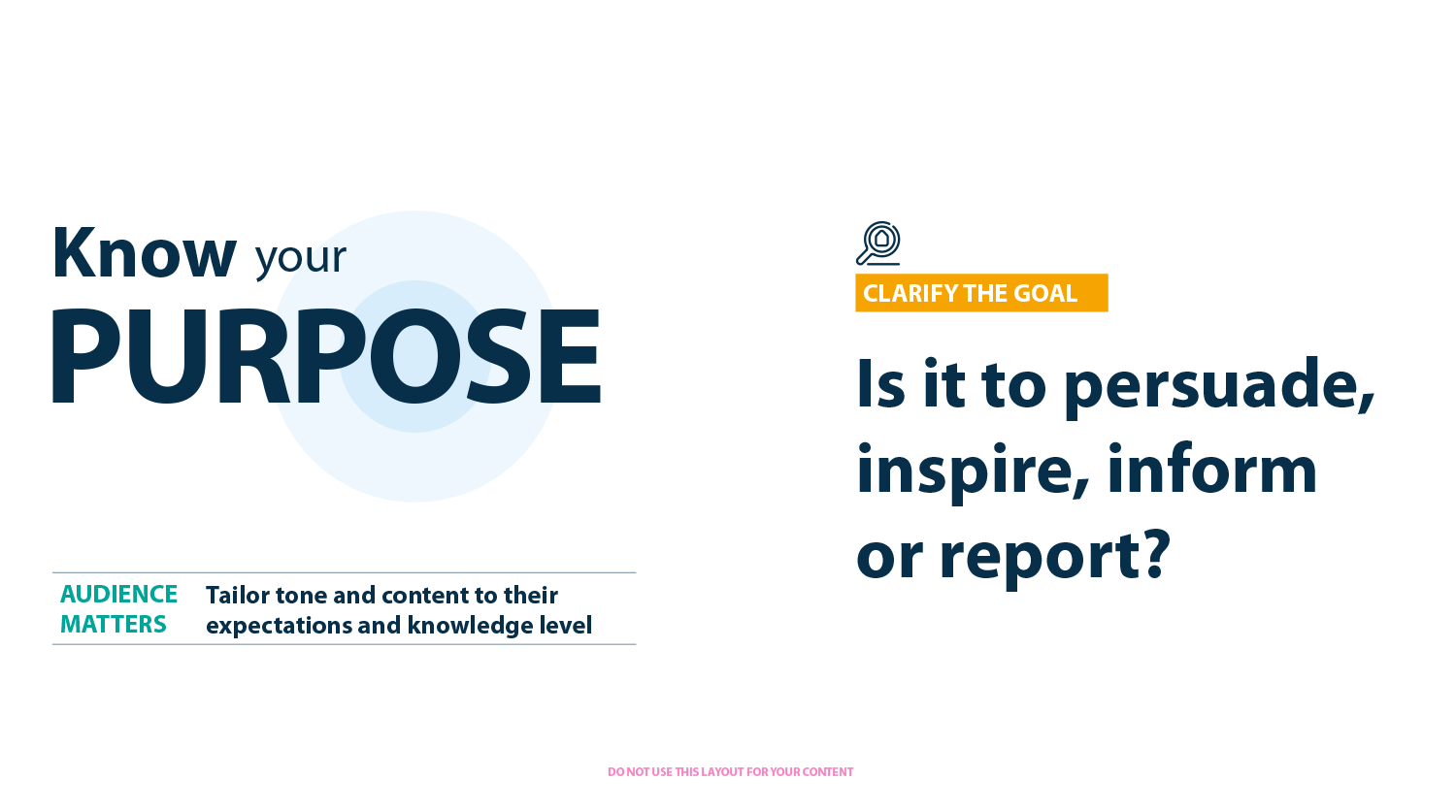
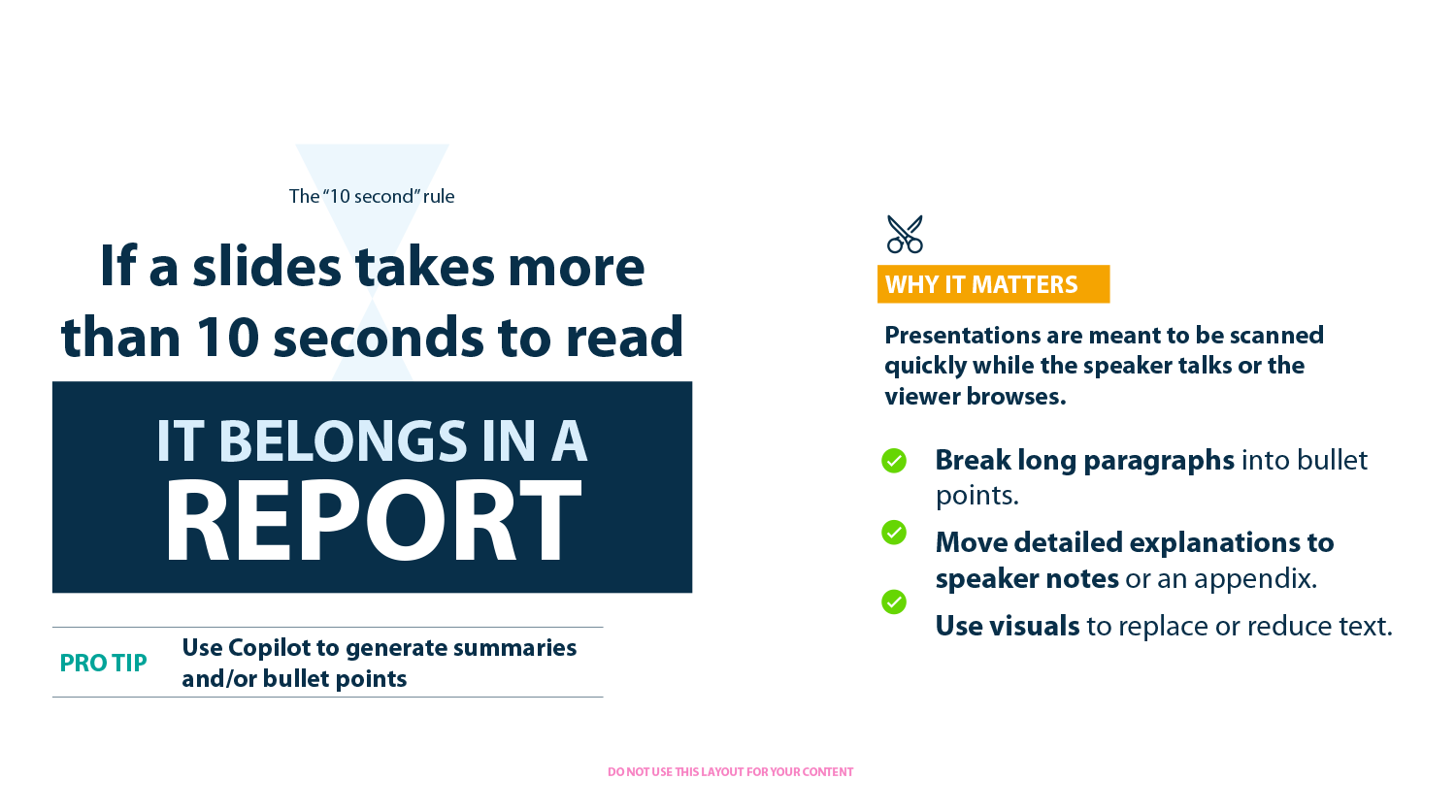
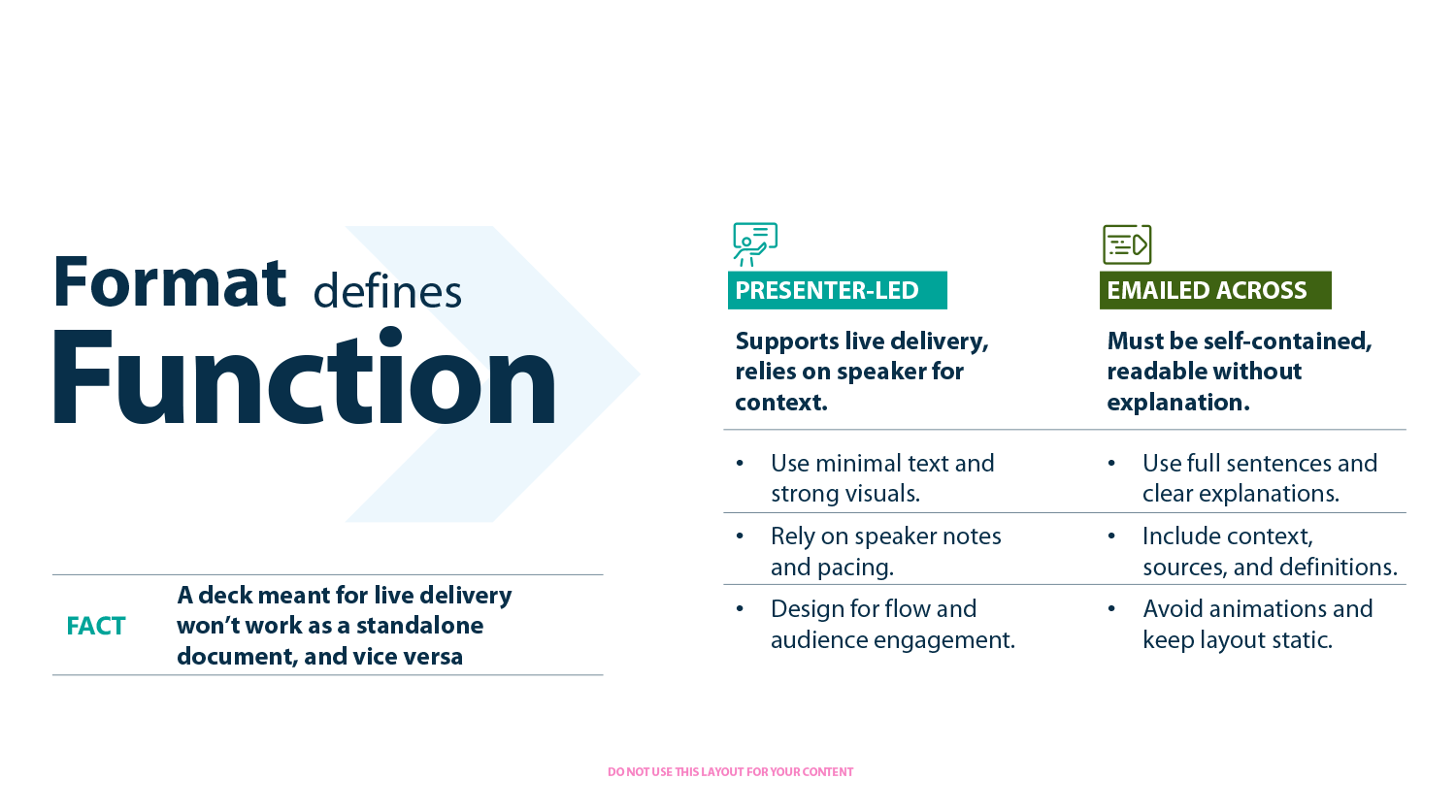
A separate presentation template was also developed for lighter, more immediate communications. Designed for concise storytelling, it offered a flexible alternative to the longer, information-rich report format.

The Solution

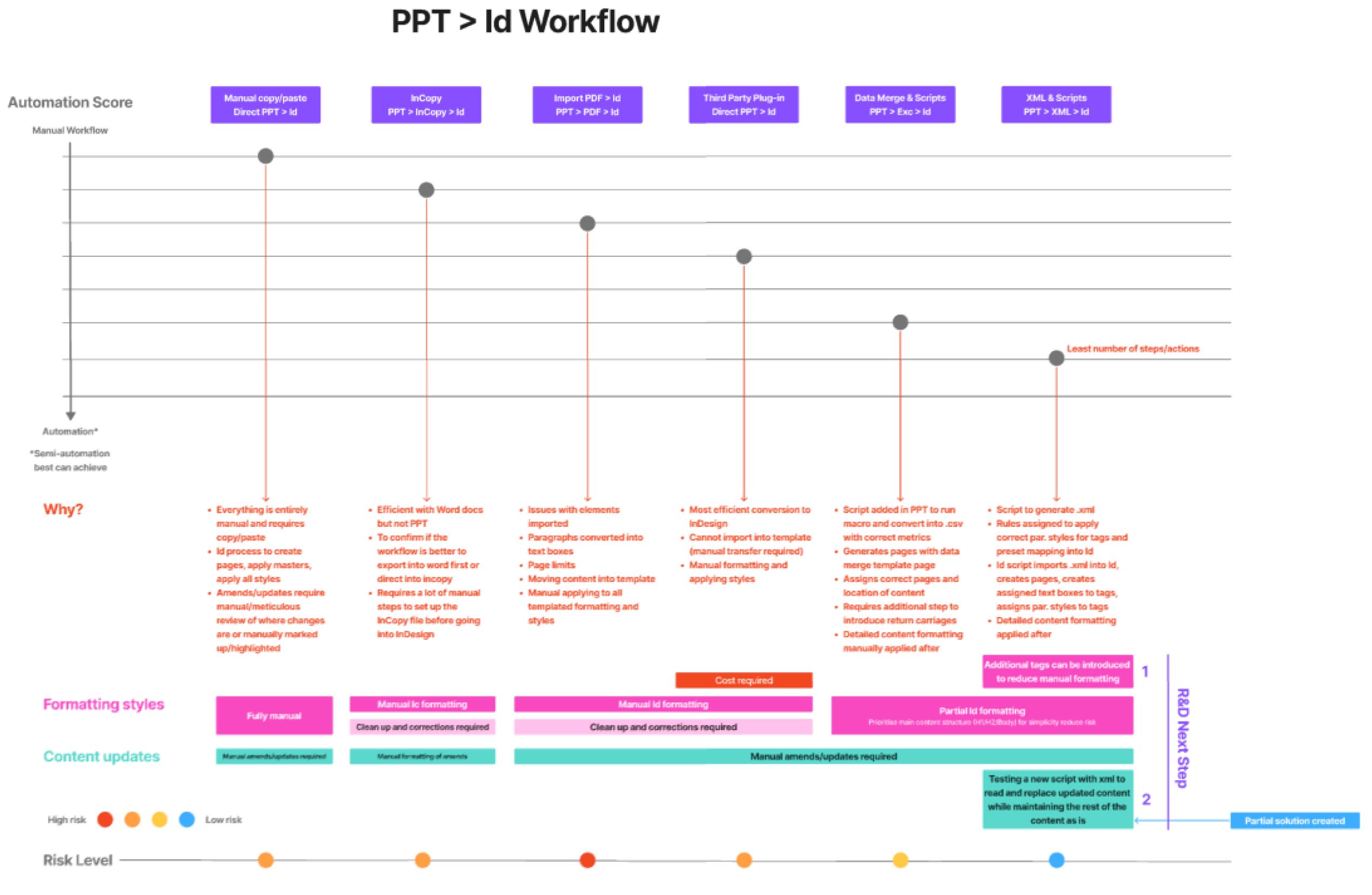
We began our research and exploration with a detailed look six options to efficiently export PowerPoint slides into InDesign alongside a template. Factors such as time, manual work required and cost were taken into account and we also looked at prioritisation for the diagrams, aiming to prioritise ones which needed the most work.

Six method options in total were explored to determine their suitability. Factors such as time, manual work required and cost were all taken into account and ranked according to the risks with each option.

The option chosen was XML Scripts as it offered a good balance of automation and manual effort required.

A tiered design request systems for diagrams

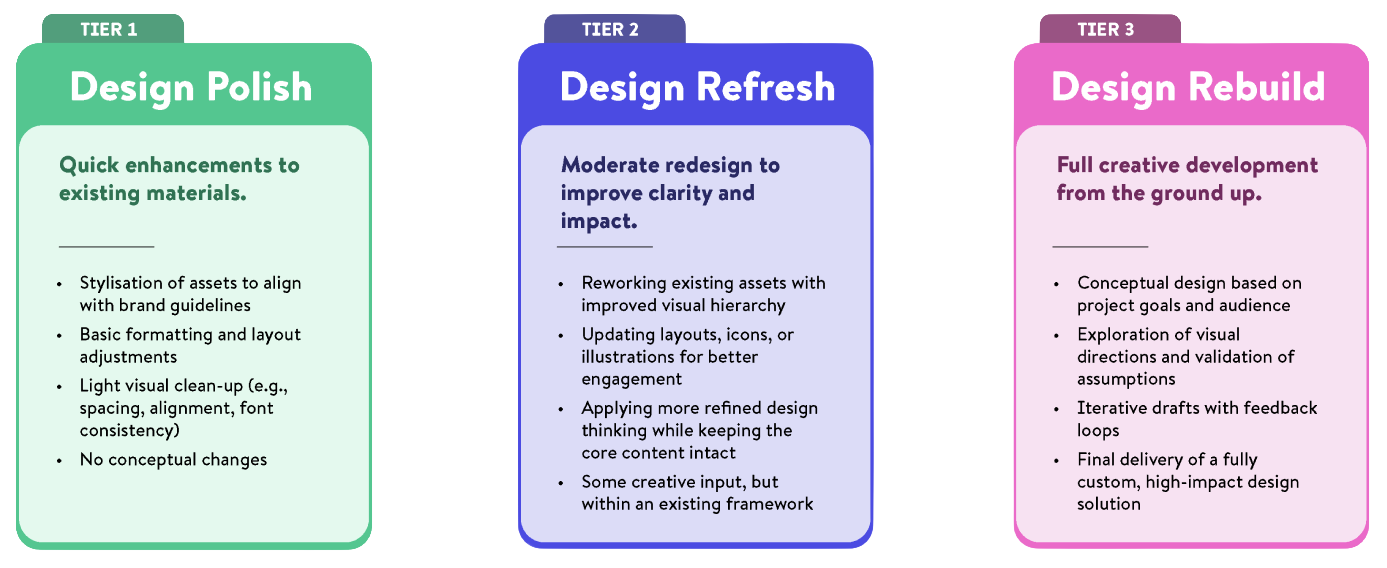
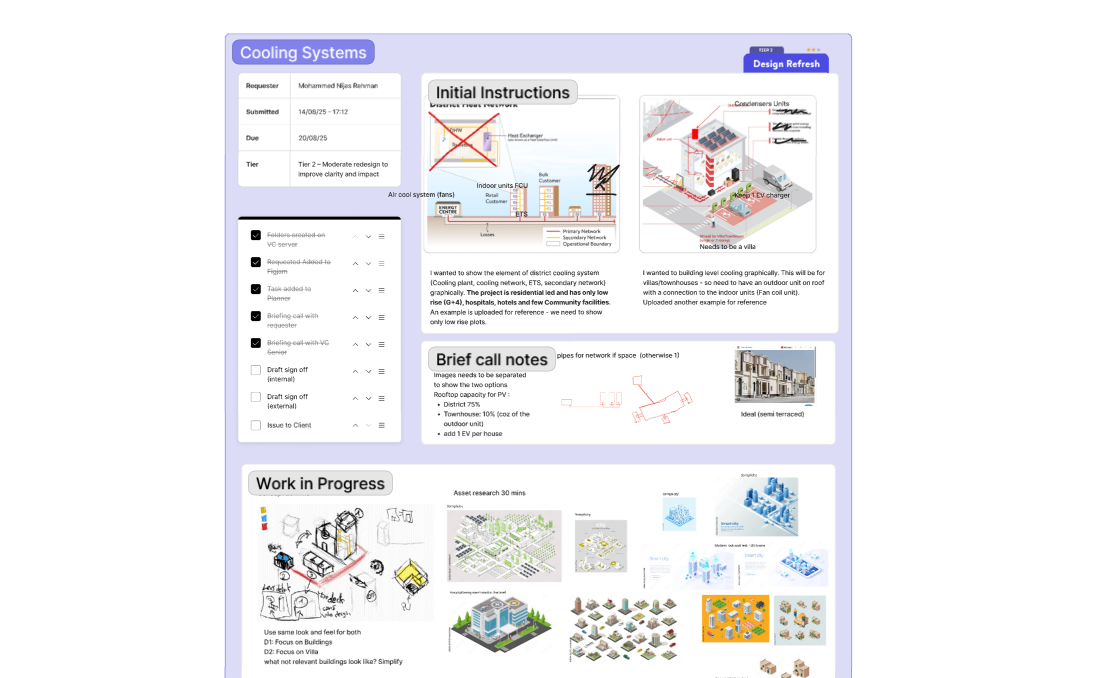
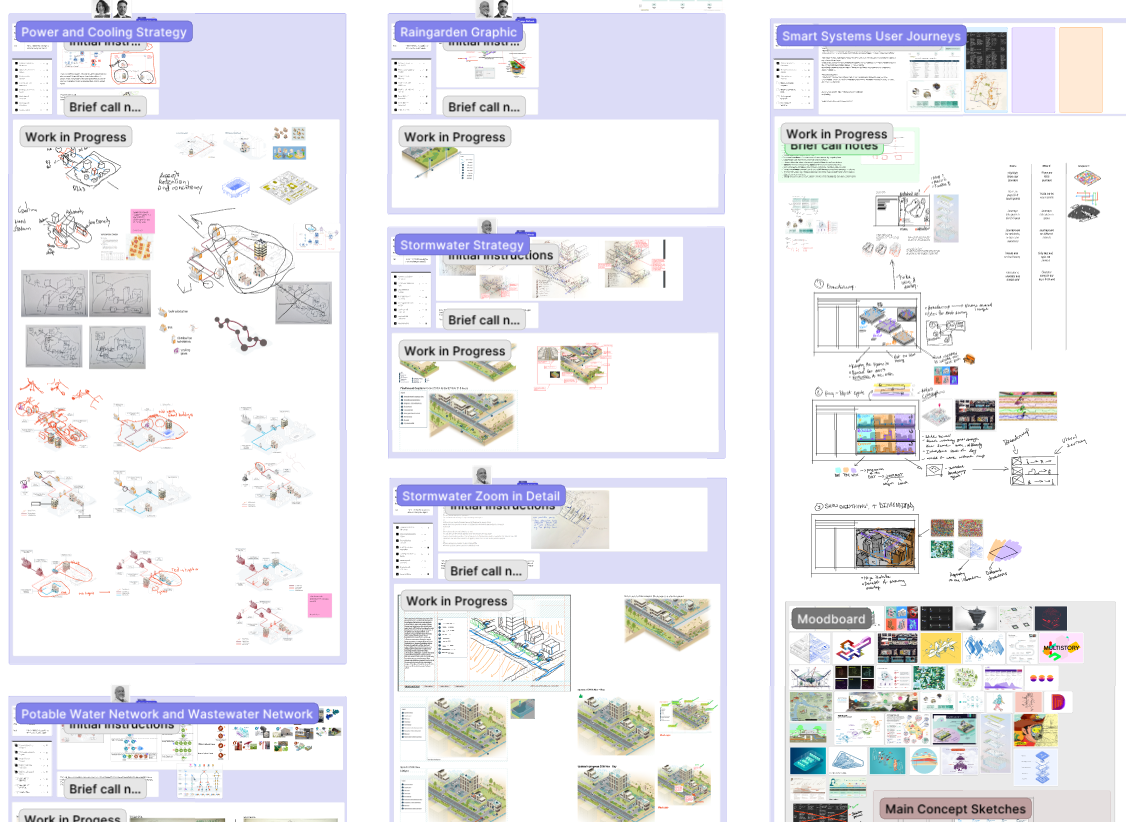
Alongside the PowerPoint export, several diagram requests ranging from some formatting to full redesigns required strict time management and a separate workflow measuring effort and importance. To achieve this, a tier system was created to determine the scope of each diagram.

Implementation

After our chosen export method was carried out, images, formatting and tables were manually added. Tables were especially time consuming although solutions were found early in the process to minimise time loss.

Each separate InDesign chapter file was then compiled into a single consistent document.

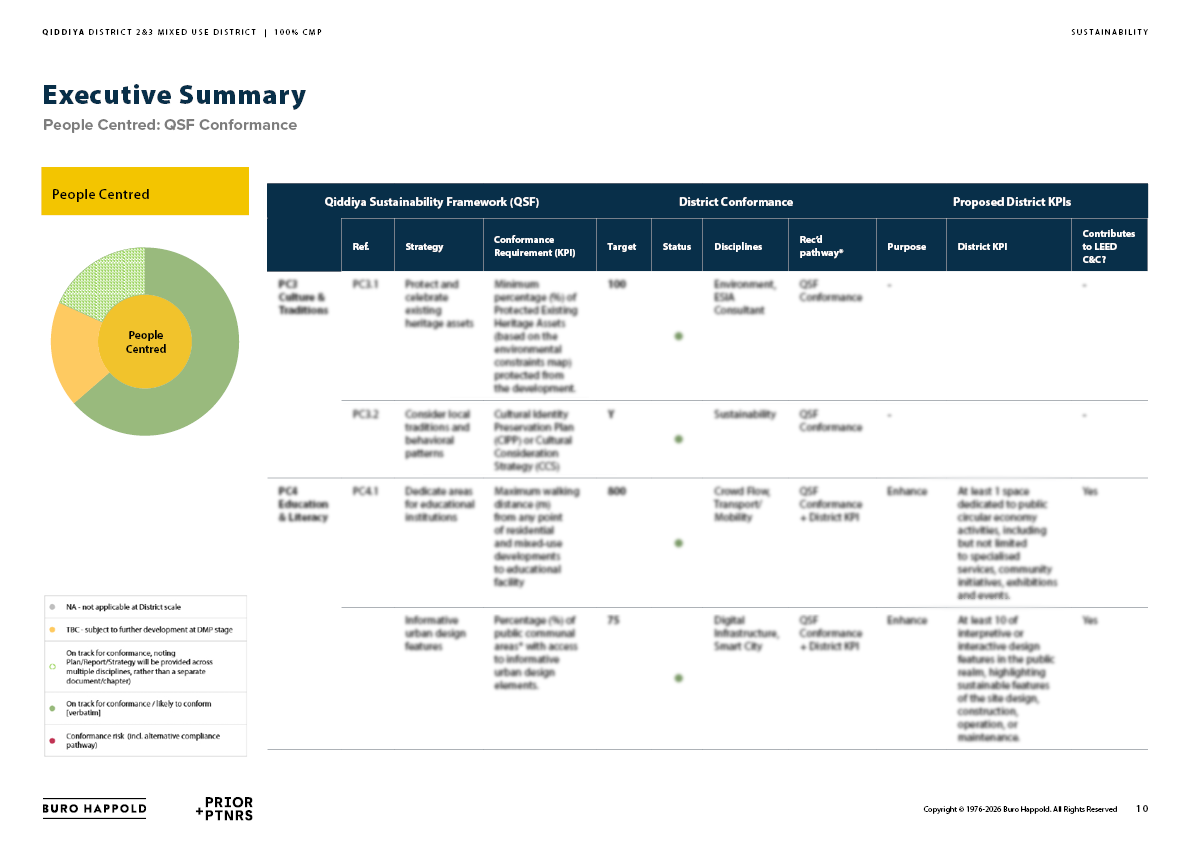
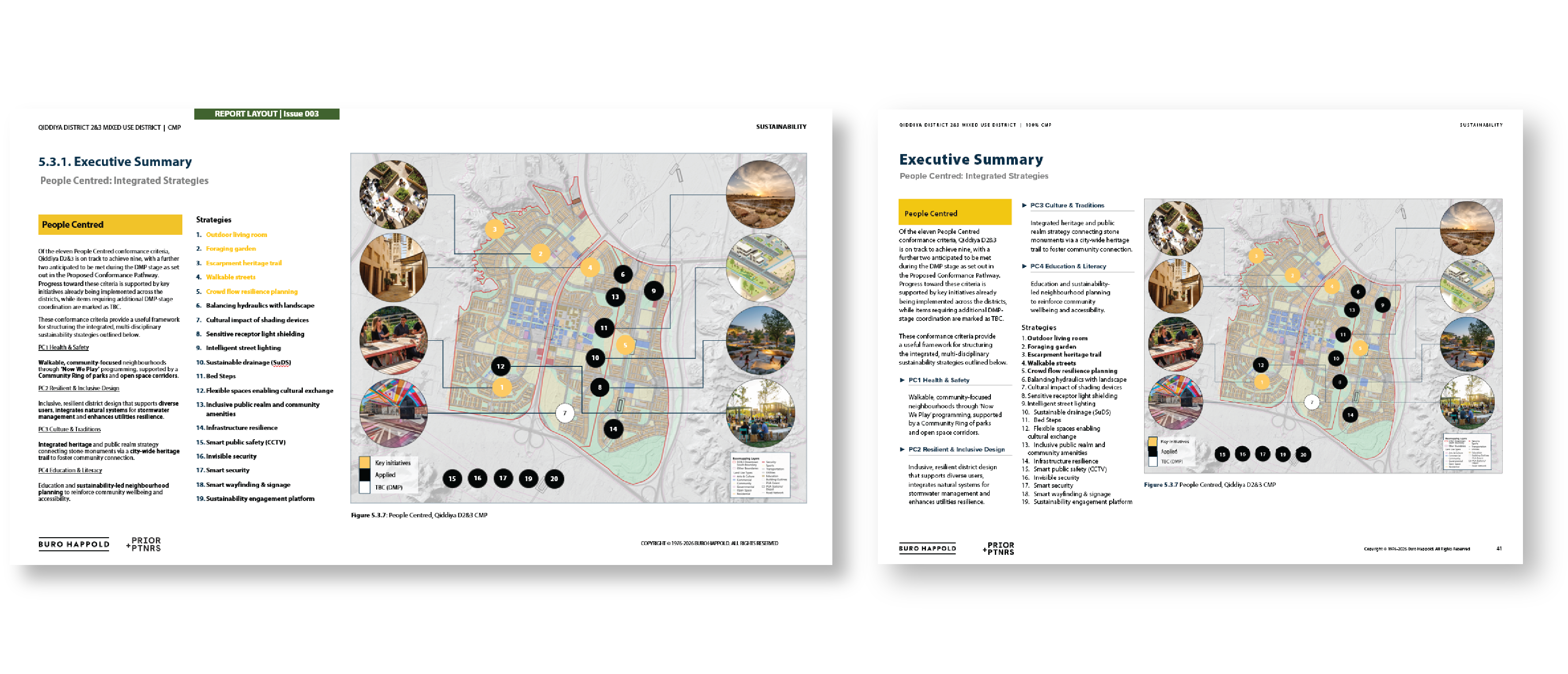
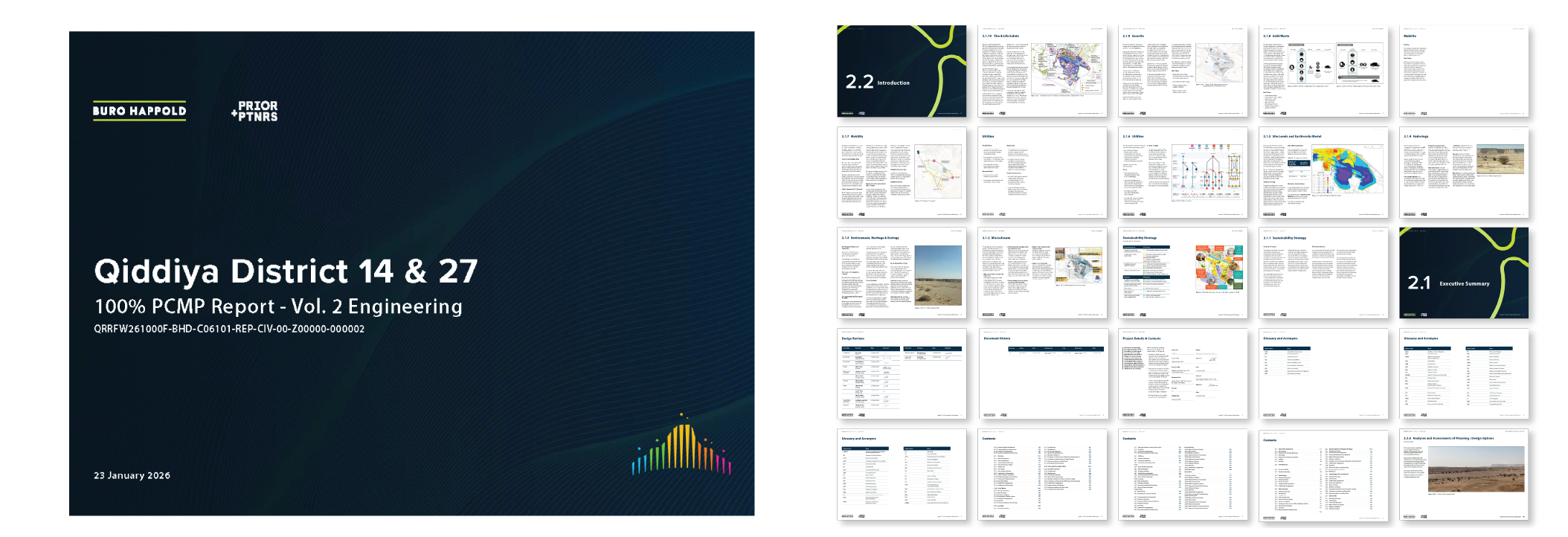
Comparison between PowerPoint (Right) and InDesign (Left) exports

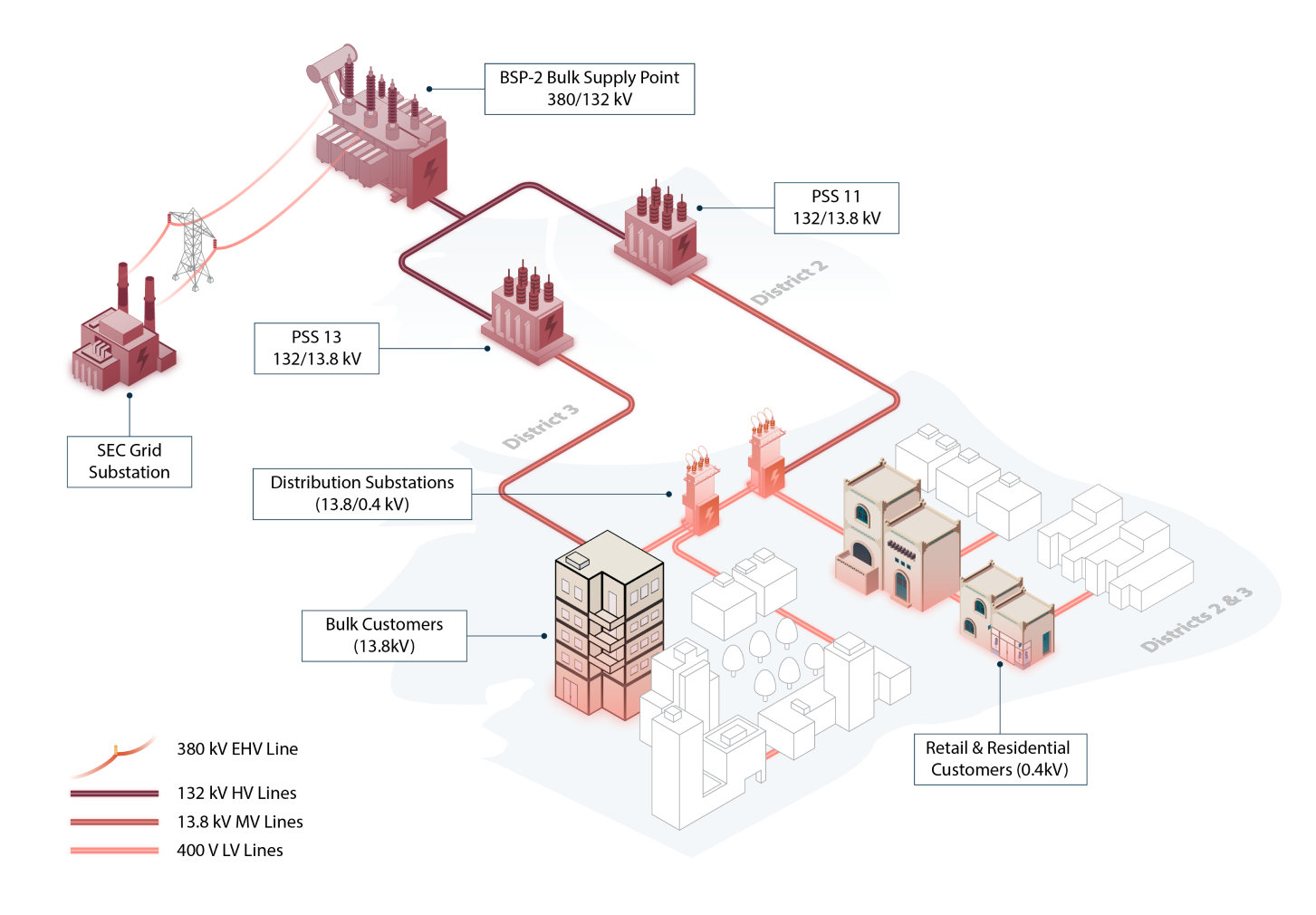
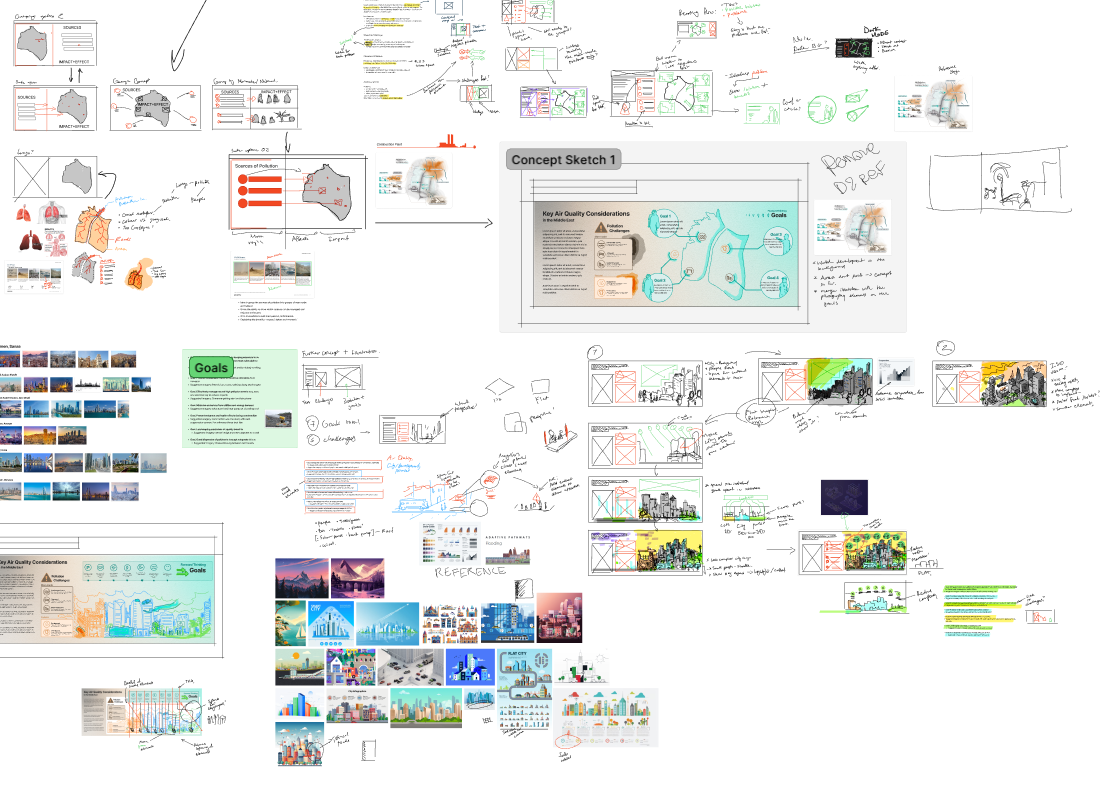
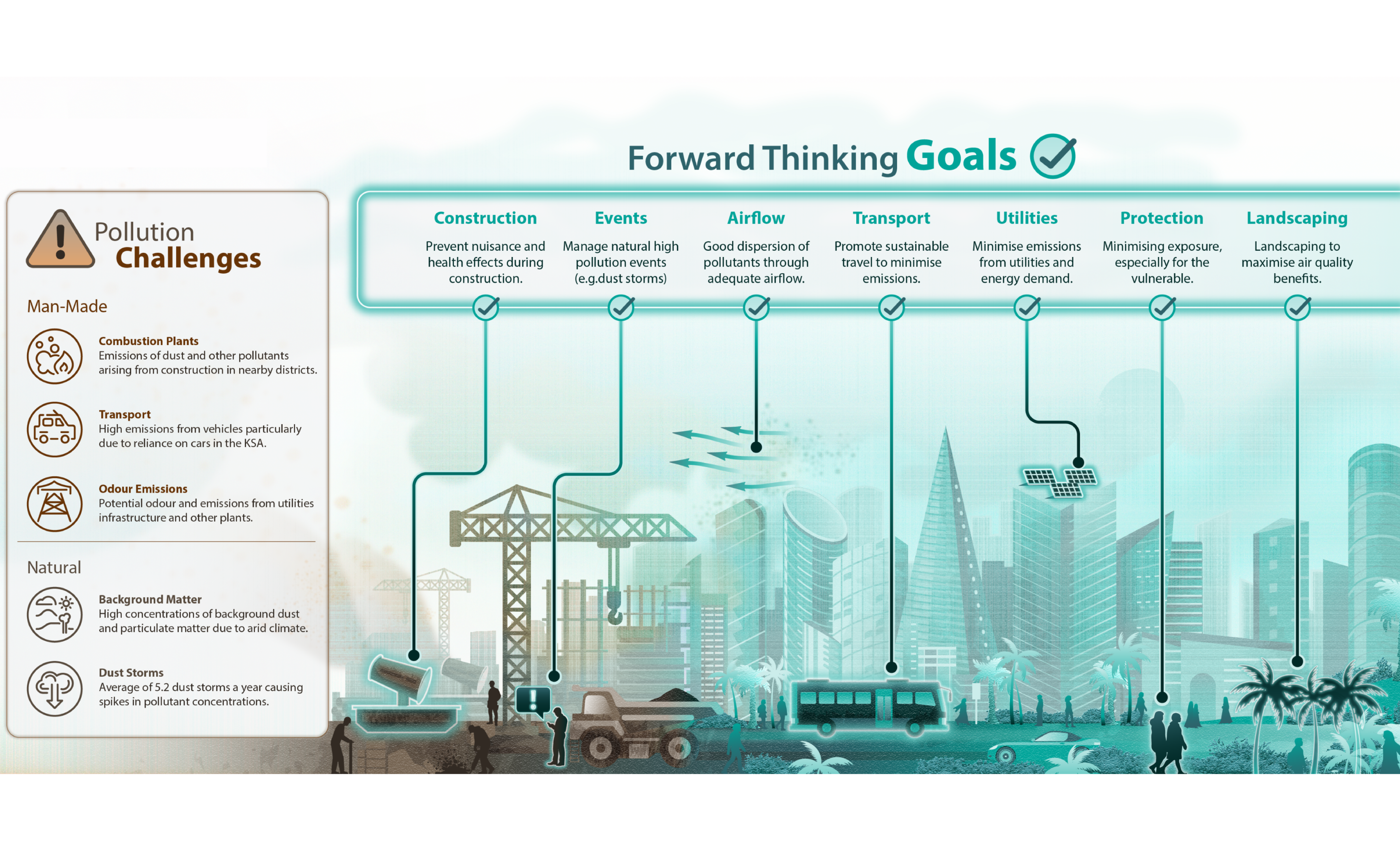
Examples of completed diagrams from various tiers:

Tier 2 graphic: Initial Request and concept

Tier 2 graphic: Final issue

Tier 3 graphic: Initial Request and concept

Tier 3 graphic: Final issue

Results and Impact

As a result of developing this new workflow the team was able to successfully orchestrate the export of two 2000+ page reports and bespoke illustrations in record time. This is in addition to the template improving consistency and the 50+ reworked diagrams aiding in clarity of information

"As Project Lead for D2/3, I worked with Alessandro and his team from an early stage to align CMP deliverables with the QIC Portfolio Template. As the first district to fully adopt it, Alessandro was instrumental in supporting team communication and embedding consistent practices across disciplines through clear guidance materials.


He was clear in identifying challenges and proactive in finding solutions that balanced programme demands with client expectations. His attention to detail is second to none, and his collaborative approach helped ensure outputs were as impactful as possible.."

- Nigel T., Associate Director Buro Happold | Infrastructure

Rigorous testing of different export methods allowed us to find the most efficient method of export from PowerPoint. Without it and the template, we realistically wouldn't be able to export the PPTs in time.

Highlighting the importance of how we adapted to challenges of volume paired with time constraints, during the process, we offered each other feedback to improve efficiency. This led to the upgrades such as keyboard shortcuts to quickly apply commonly used styles.

This was a large collaborative effort not only in the team, but across various disciplines, all working together to ensure the strict timeline was met.